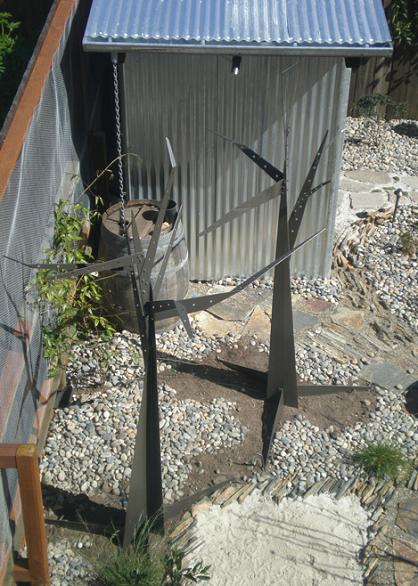
eco: solar heating means green jobs!
Our solar photovoltaic panels sit there making a dollar or two of electricity every day for us. Zero maintenance, besides occasionally wiping the grime off the panels.
As I intimated, solar heating is another story. After only two years the solar tubes on our roof stopped providing domestic hot water, so we had to turn on the back-up electric strip heater in one of our storage tanks to get hot water. A 50-gallon electric kettle is a very expensive way to get hot water, requiring far more electricity than our solar panels generate.
It was difficult to find anyone willing come and service it. (Our general contractor fired the original designer/subcontractor Bill Reyno and we wound up in legal mediation with the contractor over delays and non-functioning system.) Solar electric is just a bit of mechanical fabrication and some parts wired together; however, solar heating is tubes, wires, pipes, pumps, fittings, solder, valves, expansion tanks, electronic controllers, solenoids, and heat exchangers. There's no standardization, every contractor does it differently, and no one wants to take on responsibility for someone else's design with which they disagree. Everyone who's ever looked at our system has responded "I wouldn't do it that way..."
Finally Luminalt sent some people out. They figured out one of the pumps wasn't working. They had to isolate that pump, drain the system, dismantle it, find a lump of solder inside gumming on the mechanism, refill the system, replace a pressure valve, charge the system with glycol, test everything out. Two and a half guys, two days, $1100. Have no doubt that being environmental means green jobs for Americans! Better yet, the business end seems a little disorganized and they've yet to send me a bill!
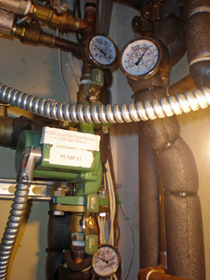
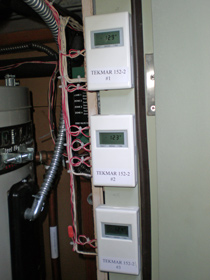
Since Luminalt fixed it, we've been getting much hotter water, maybe because they replaced a pressure valve with a higher pressure one.
The rightmost temperature gauge in the first pic shows 158 degree glycol mixture from the solar tubes, and after pumping through a heat exchanger, the top sensor in the second pic shows 129 degree drinkable water in the first tank. It's magic!
On a sunny spring day we're getting more hot water than we need or use, which makes me dream about sending some excess heat to our radiant heating system to heat our house. The system was designed to do that, but that has never worked for a litany of design flaws too depressing to recount. Moving heat around is fiddly and depends on careful system design and installation.
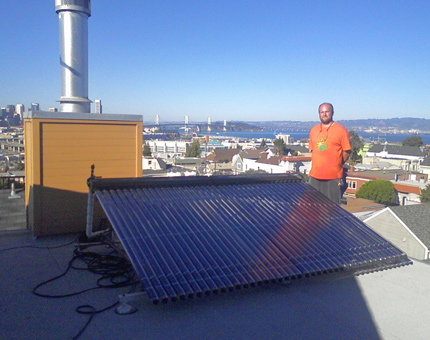
Three out of the 40 Solamax Direct Flow Evacuated Solar Energy Collector tubes in this picture have condensation on the inside, so they ought to be replaced. I called the distributor SolarThermal, and the guy laughed. If they send these tubes out by UPS, a box of glass shards will arrive on my doorstep. I'd have to pay $300 for a special pallet load to be trucked to my door. That's why most solar installers use flat plate collectors or Mazdon tubes, which are not as efficient but a lot easier to transport.
As I intimated, solar heating is another story. After only two years the solar tubes on our roof stopped providing domestic hot water, so we had to turn on the back-up electric strip heater in one of our storage tanks to get hot water. A 50-gallon electric kettle is a very expensive way to get hot water, requiring far more electricity than our solar panels generate.
It was difficult to find anyone willing come and service it. (Our general contractor fired the original designer/subcontractor Bill Reyno and we wound up in legal mediation with the contractor over delays and non-functioning system.) Solar electric is just a bit of mechanical fabrication and some parts wired together; however, solar heating is tubes, wires, pipes, pumps, fittings, solder, valves, expansion tanks, electronic controllers, solenoids, and heat exchangers. There's no standardization, every contractor does it differently, and no one wants to take on responsibility for someone else's design with which they disagree. Everyone who's ever looked at our system has responded "I wouldn't do it that way..."
Finally Luminalt sent some people out. They figured out one of the pumps wasn't working. They had to isolate that pump, drain the system, dismantle it, find a lump of solder inside gumming on the mechanism, refill the system, replace a pressure valve, charge the system with glycol, test everything out. Two and a half guys, two days, $1100. Have no doubt that being environmental means green jobs for Americans! Better yet, the business end seems a little disorganized and they've yet to send me a bill!
Since Luminalt fixed it, we've been getting much hotter water, maybe because they replaced a pressure valve with a higher pressure one.
The rightmost temperature gauge in the first pic shows 158 degree glycol mixture from the solar tubes, and after pumping through a heat exchanger, the top sensor in the second pic shows 129 degree drinkable water in the first tank. It's magic!
On a sunny spring day we're getting more hot water than we need or use, which makes me dream about sending some excess heat to our radiant heating system to heat our house. The system was designed to do that, but that has never worked for a litany of design flaws too depressing to recount. Moving heat around is fiddly and depends on careful system design and installation.
Three out of the 40 Solamax Direct Flow Evacuated Solar Energy Collector tubes in this picture have condensation on the inside, so they ought to be replaced. I called the distributor SolarThermal, and the guy laughed. If they send these tubes out by UPS, a box of glass shards will arrive on my doorstep. I'd have to pay $300 for a special pallet load to be trucked to my door. That's why most solar installers use flat plate collectors or Mazdon tubes, which are not as efficient but a lot easier to transport.
posted by skierpage at
21:50
|
1 comments
links to this post